
— A PRACTICAL GUIDE FOR SINGAPORE CSPS
Understand the regulatory framework, prepare for an ACRA compliance review and organise the work your team needs to do — from IPPC and CDD to ongoing monitoring.
Especially useful for new and newly registered CSPs.
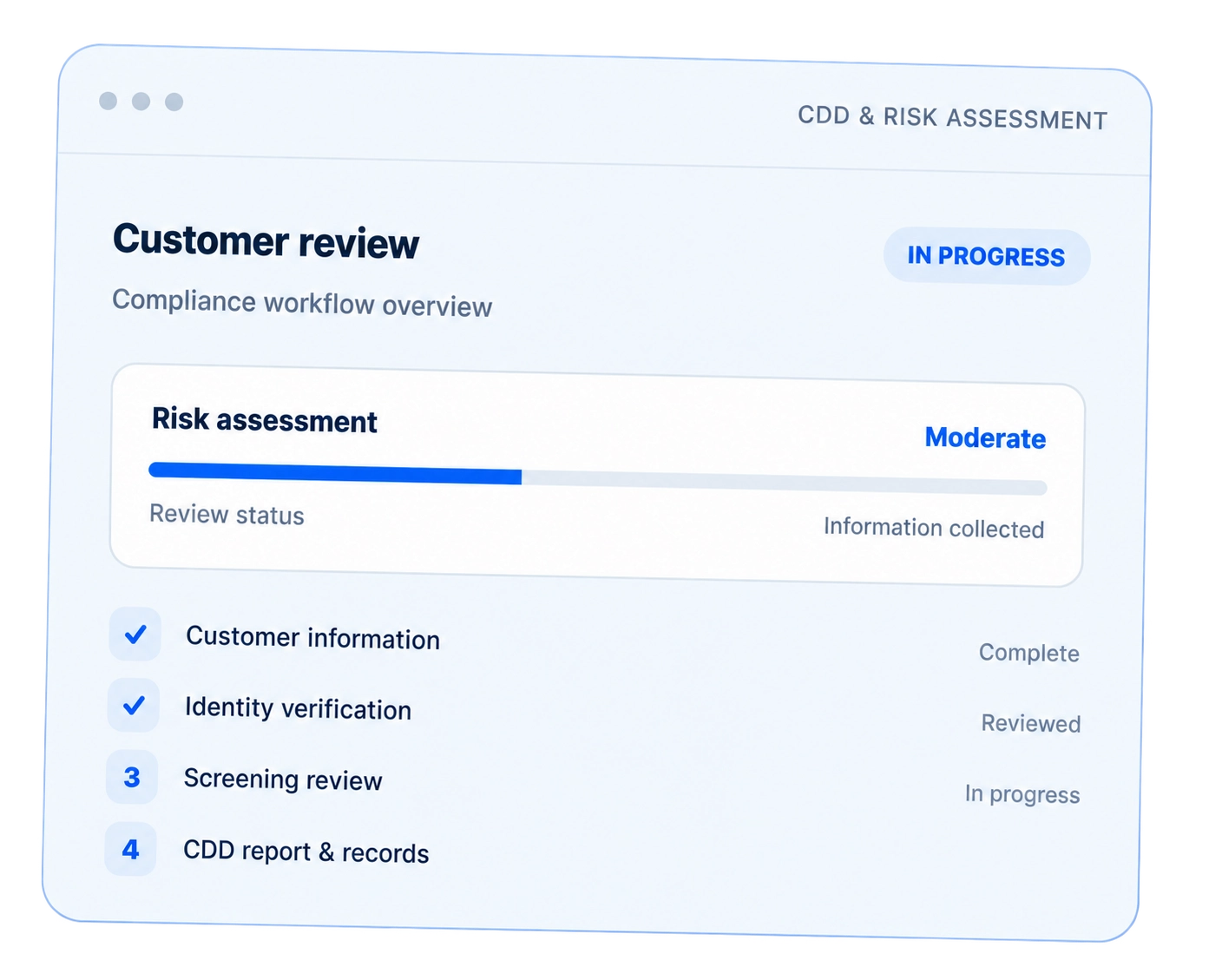
A GUIDE TO HELP YOUR TEAM
✓ Understand the framework
✓ Prepare for review
✓ Build workable processes
01 · REGULATORY FRAMEWORK
Use the official legislation and ACRA guidance as the source of truth when establishing or reviewing your firm’s compliance arrangements.
The CSP Act and Regulations set out the legal framework. ACRA’s CSP Guidelines provide practical guidance on the AML/CPF/CFT obligations that apply to registered CSPs.
02 · ACRA COMPLIANCE REVIEW
ACRA appoints private sector compliance firms (“Reviewers”) to conduct reviews. The Reviewer will examine these eight areas:
Based on ACRA’s published CSP compliance review areas. View ACRA guidance ↗
| Review Area |
|---|
|
1.
Risk assessment methods for: ML/PF/TF
|
|
2.
Internal policies, procedures, and controls (IPPC)
|
|
3.
How you verify customer identities
and conduct enhanced checks
|
|
4.
How you collect
beneficial ownership information
|
|
5.
How well you provide
beneficial ownership information to ACRA
|
|
6.
How you report
suspicious transactions
|
|
7.
How you share
policies, procedures, and controls with staff
|
|
8.
Staff training programme, including scope and
frequency
|
03 · PUT COMPLIANCE INTO PRACTICE
A useful compliance programme gives people clear steps to follow, records what was done and makes it easier to review decisions later.
Define how your firm identifies and assesses risks across its business, customers, services and relevant jurisdictions.
Set out the policies, procedures and controls that fit your CSP’s business model and operational risks. Review them when relevant circumstances change.
Collect and verify customer information, assess ownership and control, review screening results and document your rationale.
Keep customer relationships under review, preserve supporting records and make sure staff know how to escalate concerns.
Help employees understand the procedures relevant to their work and keep appropriate training records.
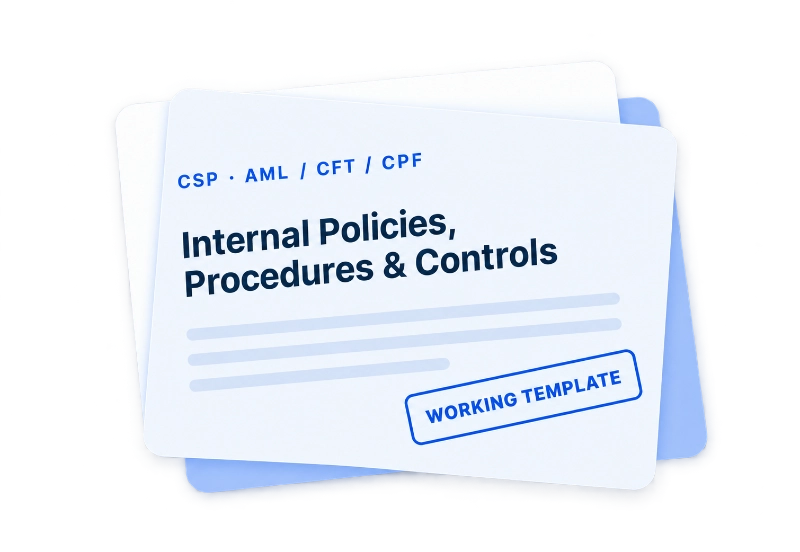
IPPC TEMPLATE · AVAILABLE FROM ALGOCANDY
With a proprietary, highly customizable template that is over 95% audit-ready, CSPs can efficiently implement, review, and maintain AML/CFT compliance controls with confidence.
04 · CHOOSING COMPLIANCE SOFTWARE
There is no one-size-fits-all platform. Compare how each solution supports your team’s compliance work, operating needs and client experience.
A PRACTICAL EVALUATION CHECKLIST
Assess the complete workflow and how it fits your CSP’s needs.
✓ Online onboarding and client information collection
✓ KYC/CDD forms and identity verification
✓ AML screening and review of potential matches
✓ Risk assessment, reports and supporting records
✓ Ongoing monitoring and follow-up workflows
✓ Ease of use for both staff and clients
BUILT FOR SINGAPORE CSP WORKFLOWS
AlgoCandy brings key stages of AML/CDD work into a structured digital process.
✓ Client onboarding and online KYC/CDD questionnaires
✓ E-signature and online identity verification
✓ AML screening and case review
✓ Risk assessment and CDD report generation
✓ Ongoing monitoring and organised records

More capabilities, without more complexity—built around the actual compliance workflow of Singapore CSPs.
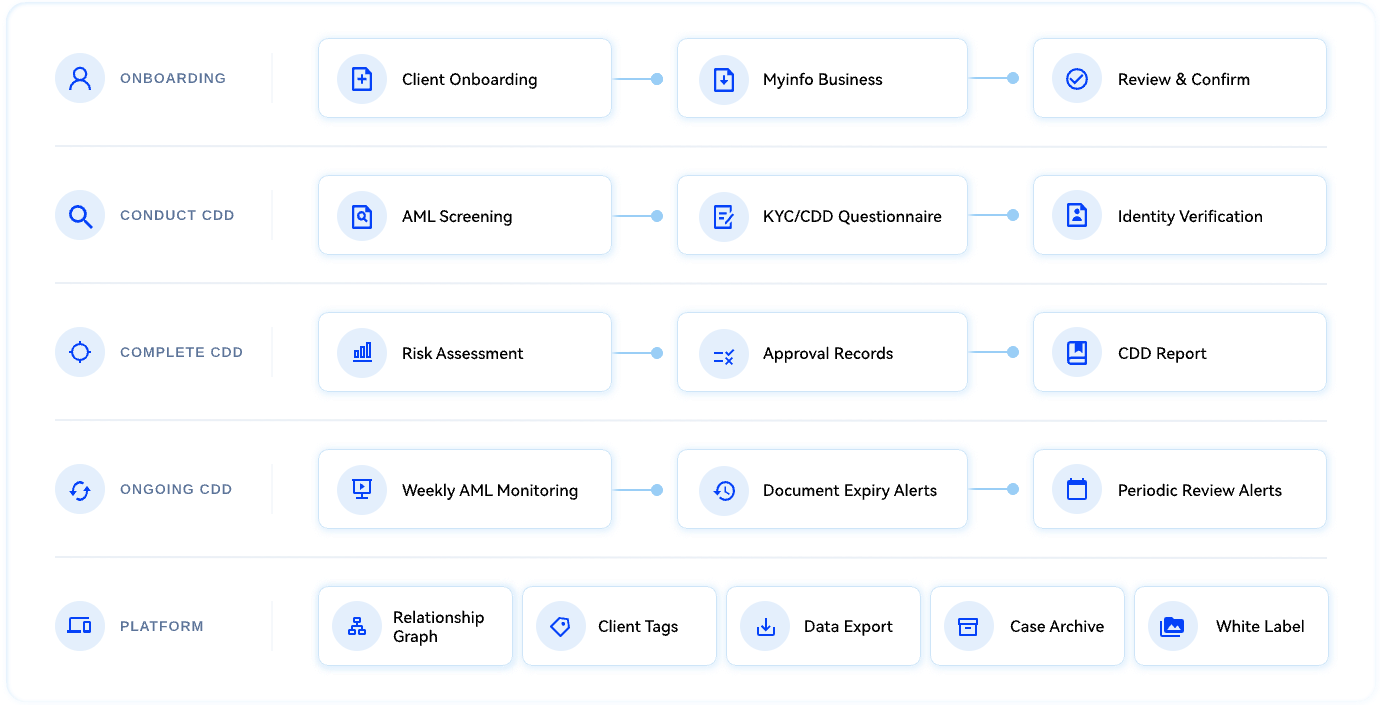
Explore how AlgoCandy supports AML/CDD workflows for Singapore CSPs.
05 · FREE COMPLIANCE SUPPORT
Use AlgoCandy’s practical tools and resources to understand your current position and decide what your team needs next.
Join practical AML/CFT training designed for Singapore CSPs. Understand key regulatory requirements, common compliance risks, and how to manage them effectively.
Explore a structured overview of key AML/CFT obligations, compliance processes, and supporting records for Singapore CSPs.
Understand what to expect during an ACRA compliance review, what records to prepare, and how to address common areas of concern.
Answer a few guided questions to evaluate your current compliance readiness and quickly identify areas that may require attention.
QUICK ANSWERS
Use these answers as general guidance and refer to the current official sources for requirements that apply to your firm.
No. Screening is one part of a broader compliance process that may also include risk assessment, CDD, record keeping, ongoing monitoring, internal procedures and escalation.
No. Software can support workflows and record keeping, but it does not replace your CSP’s policies, professional judgement or regulatory responsibilities.
A template can provide a structured starting point. Your firm should review and tailor it to its services, customers, operating model and risk profile.
Refer to the current Corporate Service Providers Act, the Regulations, ACRA’s CSP Guidelines and any relevant official directions or materials.